Museums are changing.
While artifacts, documents and exhibits still matter, some of the newest educational attractions are asking students to do more than simply look at history, science and culture. They are asking them to participate, question, investigate and consider their own place in the story.
For teachers planning educational travel, that opens up some exciting possibilities.
Three major new attractions in Chicago, Washington D.C., and New York City are bringing fresh learning opportunities to destinations already packed with educational experiences. Two opened this summer, while a third is preparing to welcome visitors in 2027.
Here’s what’s new, how the openings are going, and why we think educators should have them on their radar.
The Obama Presidential Center Is Now Open in Chicago
After years of anticipation, the Obama Presidential Center officially opened to the public on June 19, 2026, following its dedication ceremony the previous day. Located on a 19.3-acre campus in Chicago’s historic South Side, the Center is much more than a traditional presidential museum. (Obama Foundation)
And a quick terminology note for anyone Googling “Obama Presidential Library”: the official name is the Obama Presidential Center. Unlike the traditional presidential library model, the Center is operated by the Obama Foundation.
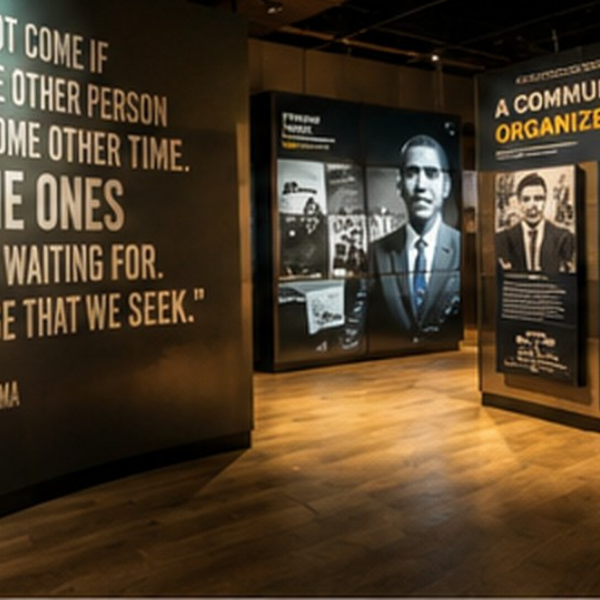
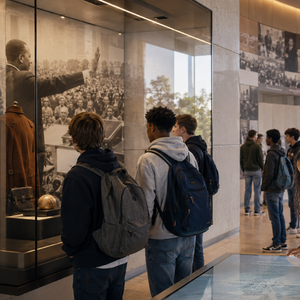
Inside the Museum, students can explore Barack Obama’s journey from community organizer to the presidency alongside broader stories about American democracy, civic participation and social change. Exhibits include an immersive look at the 2008 election, presidential artifacts, a replica Oval Office and stories that place the administration within the larger context of American history. (Chicago Sun-Times)
But some of the most interesting educational possibilities extend beyond the presidency itself.
The campus also includes a Chicago Public Library branch, public art, gardens, gathering and recreation spaces, and programming centered around civics and democracy, arts and culture, food, wellness and community involvement. (Obama Foundation)
For students, that creates room for bigger questions.
What makes someone become involved in their community? How does a local issue grow into a national movement? What role do ordinary citizens play in democracy? How do leaders communicate ideas and build coalitions?
Those are questions students can discuss in a classroom. Standing in the community where much of Barack and Michelle Obama’s own public lives began gives those conversations context.
So, how is it doing?
Very well, particularly if ticket demand is any indication.
Museum tickets were already sold out through October before the Center officially opened, and the Foundation currently warns visitors that demand remains high. (CBS News)
The response from educators may be even more telling. Every available K-12 field trip reservation through December 31, 2026 is already full. School visits officially begin this fall, with self-guided field trips built around real-world case studies and the idea of helping students consider how they can create change in their own communities. (Obama Foundation)
That makes the Center an especially compelling new addition to a Chicago educational tour. Pair it with institutions like the DuSable Black History Museum, Griffin Museum of Science and Industry, the Art Institute of Chicago, or an architecture tour, and students can explore the city through history, politics, culture, science, and the arts in a single trip.
National Geographic Has Reinvented Its Washington D.C. Museum
Washington, D.C. gained another major educational attraction this summer when the National Geographic Museum of Exploration opened on June 26, 2026.
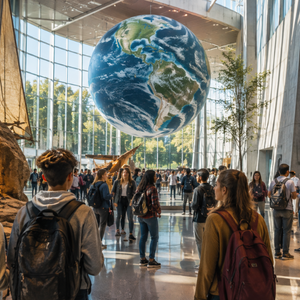
The new museum is part of the transformation of National Geographic Society’s longtime headquarters and includes more than 100,000 square feet of public space dedicated to science, geography, conservation, storytelling and exploration. (National Geographic Museum)
This is not simply a museum about National Geographic.
It is designed around the process of exploration itself.
Students can encounter equipment used by real National Geographic Explorers, explore the Society’s archives, experience immersive media, learn about wildlife through Joel Sartore’s Photo Ark: Animals of Earth, and investigate the relationship between geography, people and the environment. (National Geographic Museum)
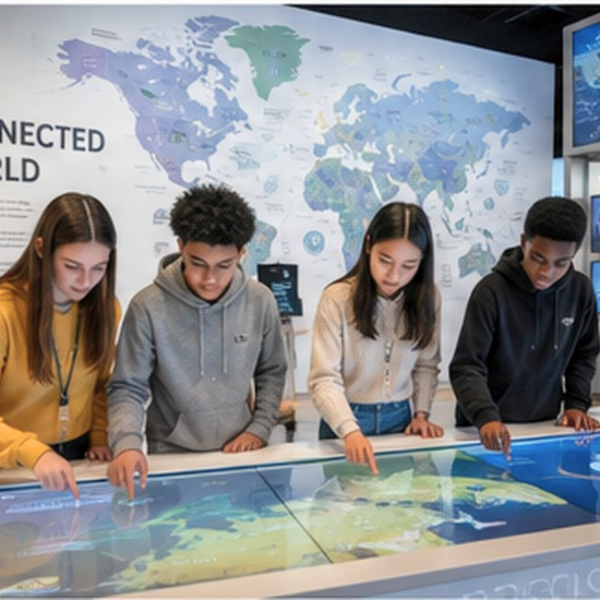
For student groups, one of the most interesting additions is the Learning Launchpad, a space specifically designed to turn geographic concepts into hands-on problem solving.
Students work with themes such as place, patterns, scale and time while investigating real environmental and geographic challenges. Activities encourage them to interpret data, model wildlife movement, think about wetland engineering, use photography as a storytelling tool and explore digital maps using National Geographic MapMaker. (National Geographic Education Blog)
Then there’s the Geoverse, an immersive theater that uses technologies including LiDAR and large-scale visuals to put students alongside explorers working in places like the Okavango Delta and the rainforests of Costa Rica and Peru. (National Geographic Museum)
In other words, students aren’t only learning what explorers discovered. They get a glimpse into how people investigate a question in the real world.
That distinction matters.
One of the great benefits of educational travel is helping students understand that history, geography and science aren’t simply collections of facts. They are ongoing processes of asking questions, gathering evidence, interpreting what we find and occasionally realizing that the answer creates ten new questions.
What are visitors saying so far?
The museum is still finding its footing, and early public reaction has been more mixed than the response to the Obama Presidential Center.
Visitors have praised its architecture, photography, interactive experiences and Learning Launchpad, while some have felt the museum is smaller than expected or questioned the value of the roughly $30 general admission price. (Tripadvisor)
For educators, however, the group experience is a little different from a typical individual visit. Groups of 20 or more receive dedicated group benefits, including discounted admission, a separate entrance and access to the Learning Launchpad. Groups can currently reserve as far as 18 months ahead. (National Geographic Museum)
We think its strongest value is as part of a larger Washington D.C. educational tour, particularly for groups interested in STEM, environmental science, geography, media or photography. A student might examine primary sources at the National Archives one morning and use mapping technology to investigate an environmental question that afternoon.
That is exactly the kind of cross-curricular connection educational travel does especially well.
Coming Next: The Hip Hop Museum in the Bronx
Our third attraction isn’t open quite yet, but this is one educators may want to start thinking about now.
The Hip Hop Museum is being built along the Harlem River in the Bronx, the New York City borough where hip-hop was born.
Originally expected to open in 2026, the museum has now pushed its opening to spring 2027. In July, founder and CEO Rocky Bucano reported that the interior build-out was more than 60% complete. (News12 Bronx)
When it opens, the museum will trace hip-hop from its roots in Bronx neighborhoods to a cultural movement with worldwide influence.
And that story reaches much further than music.
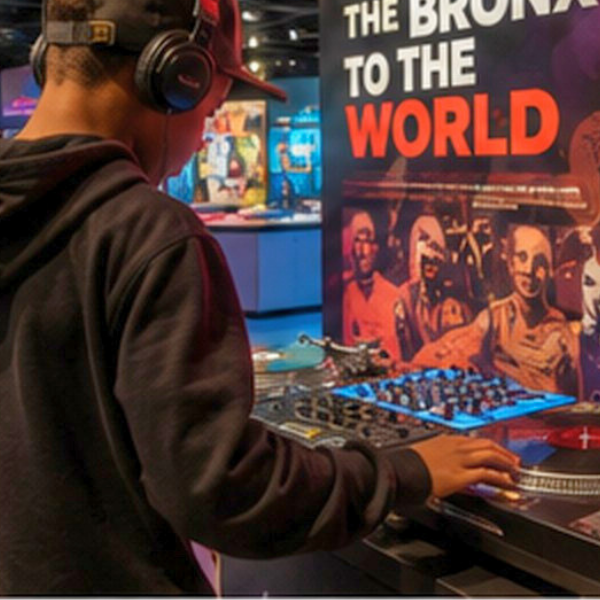
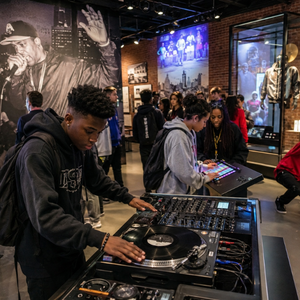
Students will be able to explore DJing, MCing, breaking, graffiti, fashion, visual art, technology, entrepreneurship and the global growth of hip-hop culture. Plans include interactive exhibits, rotating galleries, performance spaces, workshops and opportunities for visitors to actually experiment with elements of the art form rather than simply observe them. (The Hip Hop Museum)
That makes it surprisingly rich territory for interdisciplinary learning.
A music group might study sampling, rhythm and production. An art class can look at graffiti and graphic design. History students can explore New York in the 1970s and the social conditions surrounding hip-hop’s emergence. Media students can examine how a local cultural movement moved through radio, television, fashion, and eventually digital media to influence communities around the world.
There is also an important life lesson tucked inside that history.
Hip-hop is, in many ways, a story about young people making something new with the resources available to them.
Students learn differently when they can stand in the place where something actually happened. Visiting the Bronx allows them to connect a global cultural phenomenon to the neighborhoods, people, and circumstances that produced it.
Once the museum opens, it could become a fascinating addition to a New York City educational tour, especially for performing arts, music, media, history and cultural studies groups.
New Attractions, Bigger Conversations
The best educational trips don’t try to recreate school somewhere else.
They give students experiences that add something the classroom can’t.
At the Obama Presidential Center, a conversation about civics can become a conversation about a student’s own ability to participate in their community.
At the National Geographic Museum of Exploration, geography can become investigation, problem-solving, and fieldwork.
At The Hip Hop Museum, music can become a doorway into history, technology, identity, entrepreneurship, and global culture.
That’s why new attractions like these excite us.
They aren’t simply three more places to put on an itinerary. They give educators three new ways to help students connect what they’re learning to the much bigger, messier and more interesting world outside school.
And sometimes, that’s the part of a trip they remember long after the test is over.
One thing I deliberately didn’t do here is pretend every shiny new attraction has been universally adored. The Nat Geo museum has gotten noticeably mixed early feedback, so I think acknowledging that while explaining why its dedicated student-group programming changes the equation for teachers makes the article substantially more credible.
I also love the Hip Hop Museum here. It keeps the piece from becoming “two new government/history-ish museums and another museum,” and gives us a very natural internal link to NYC while opening the door to performing arts, media, music, history, art, and culture.