
Why Consider a Fall Student Trip?
Spring has traditionally been one of the busiest seasons for student group travel.
Industry research from the Student & Youth Travel Association (SYTA) found that spring sees the highest volume of student group travel, with May leading all months in student volume.
That popularity can also mean more competition for hotels, transportation, attractions, performance opportunities, and other trip experiences.
For some schools, moving a student trip to the fall can open up new possibilities. Depending on the destination and travel dates, groups may find greater availability, more itinerary flexibility, smaller crowds, and potential pricing advantages.
There are benefits beyond logistics, too. Traveling near the beginning of the school year gives students an opportunity to build relationships and create shared experiences that teachers can bring back into the classroom throughout the year.
If you’re planning a new student trip or wondering whether your traditional spring trip could work at a different time of year, here are 10 reasons to consider traveling in the fall.
1. Avoid Peak Student Travel Season
When you travel can have a big impact on your overall trip experience.
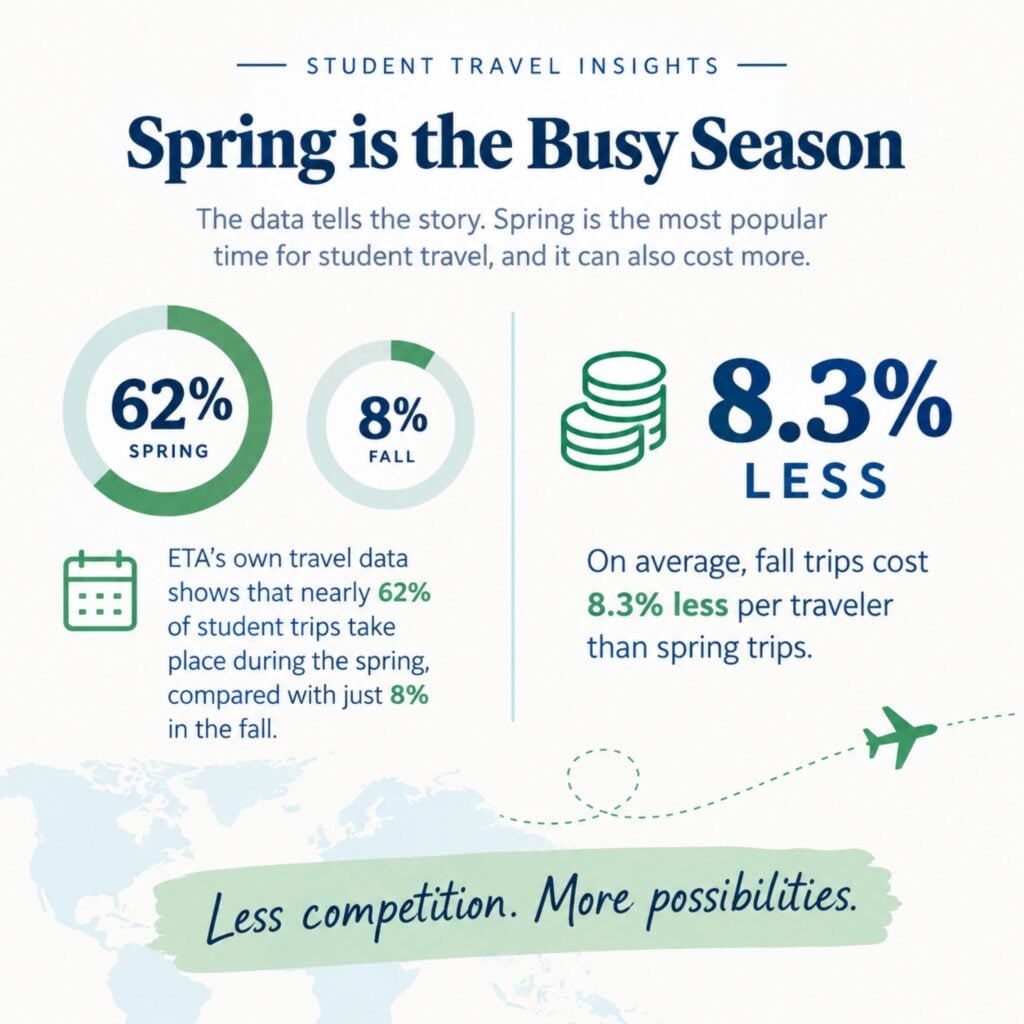
ETA’s own travel data shows that nearly 62% of student trips take place during the spring, compared with just 8% in the fall.
That concentration means many school groups are competing for hotels, motorcoaches, attractions, restaurants, workshops, and other experiences in popular student travel destinations during the same relatively short window.
Traveling in the fall may give your group more room to work with. With fewer school groups traveling during the season, you may have more flexibility when deciding where to stay, what to see, and how to structure each day of your itinerary.
2. Find Better Pricing Opportunities
Traveling outside the busiest student travel season can also create opportunities for better pricing.
With fewer groups competing for hotels, transportation, attractions, and other trip components, fall dates may offer more favorable rates depending on the destination and itinerary.
ETA DATA: FALL TRIPS COST 8.3% LESS
Based on ETA’s historical trip data, fall trips cost an average of $104 less per traveler than similar spring trips.
That doesn’t mean every fall trip will cost less. Destination, transportation, itinerary, travel dates, and group size all affect pricing. But for teachers trying to make travel more accessible to students, even a modest difference in per-person cost can add up across an entire group.
3. Get More of Your First Choices on Your Itinerary
Every teacher has a few “must-haves” when planning a student trip. Maybe it’s staying in a certain area, visiting a popular attraction at the right time of day, attending a Broadway workshop, performing at a particular venue, or eating at a favorite student-friendly restaurant.
During peak travel periods, availability can shape your itinerary before you ever start thinking about what would work best for your students. A preferred hotel may be full. The ideal attraction time may be unavailable. A workshop or performance opportunity may already be booked.
Traveling in the fall can give your travel planner more options to build the itinerary around your priorities, rather than around what is still available.
That flexibility can make a difference throughout the trip. Getting an earlier museum entry, staying closer to the sites you plan to visit, or securing a better-timed workshop can help the entire day run more smoothly.
Instead of asking, “What can we still get?” you may have more opportunities to ask, “What works best for our students?”
Planning early still matters regardless of when you travel. The sooner you start, the more options you generally have for dates, accommodations, transportation, and itinerary experiences.
4. Experience Smaller Crowds
Anyone who has visited a major student travel destination during peak season knows how busy it can get. Popular museums, monuments, historic sites, restaurants, and attractions can fill with school groups and other visitors, particularly during high-demand spring weeks.
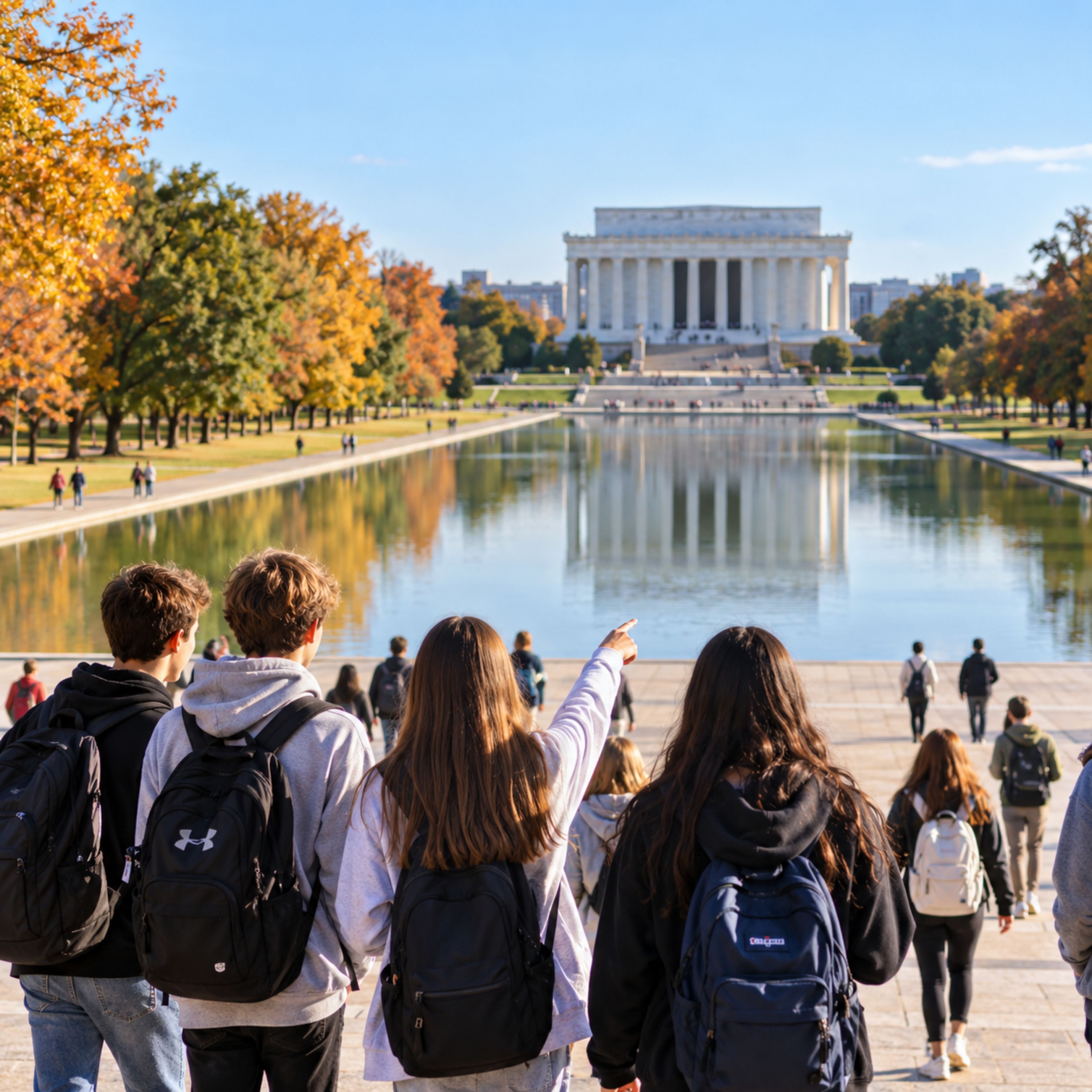
Washington, D.C. is a great example. Smithsonian research found that 35% of annual Smithsonian visits occur during the spring, compared with just 19% in the fall. The Smithsonian notes that spring visitation is influenced by cherry blossom season and spring breaks for middle and high schools.
Traveling in the fall can mean a very different experience. Fewer crowds can make it easier to navigate attractions with a student group, keep everyone together, and move efficiently from one stop to another.
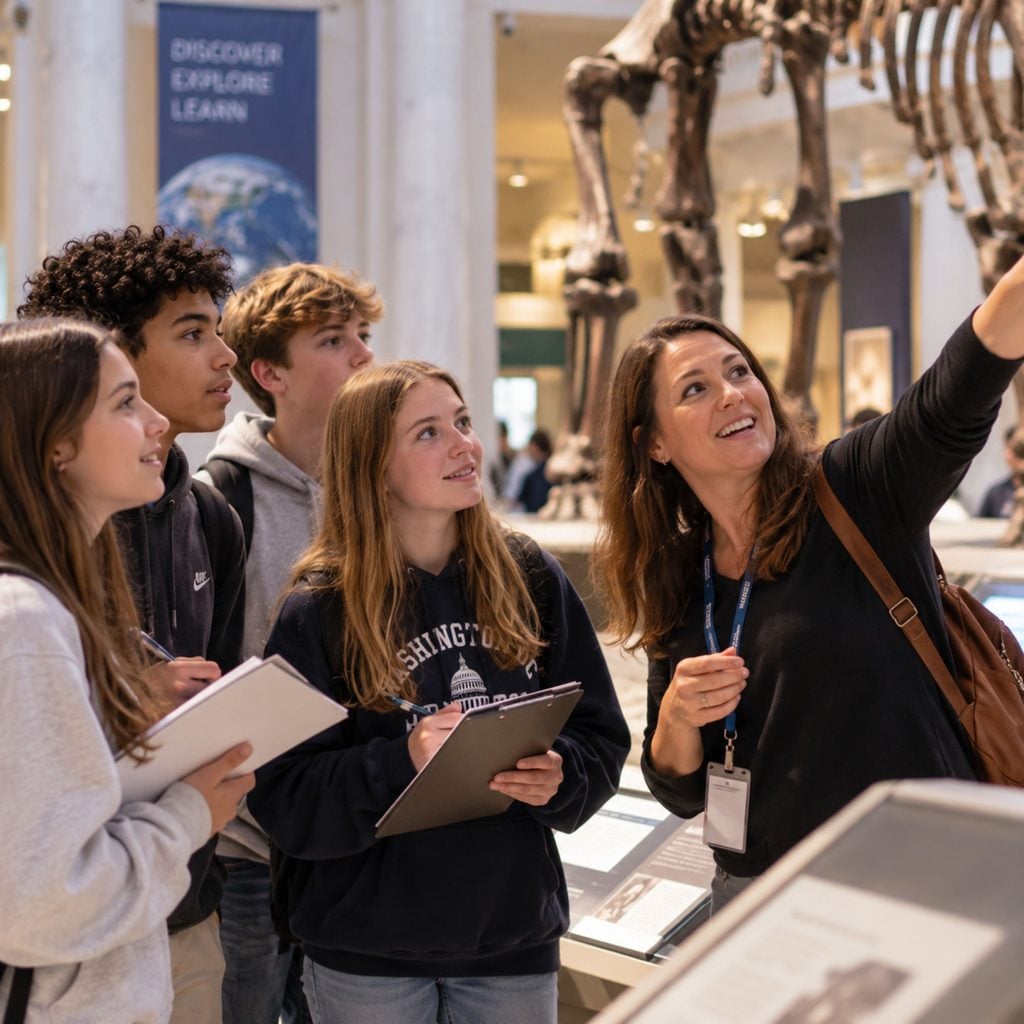
It can also create a better learning environment. Students may have more room to gather around a guide, ask questions, take in their surroundings, and focus on what they’re experiencing rather than navigating a crowded space.
For teachers and chaperones responsible for a large group of students, that extra breathing room can make a noticeable difference.
5. Enjoy Comfortable Fall Weather and Scenery
Weather is always destination-specific, and there’s never a guarantee when you travel. But fall can be a particularly enjoyable season in many popular student destinations.
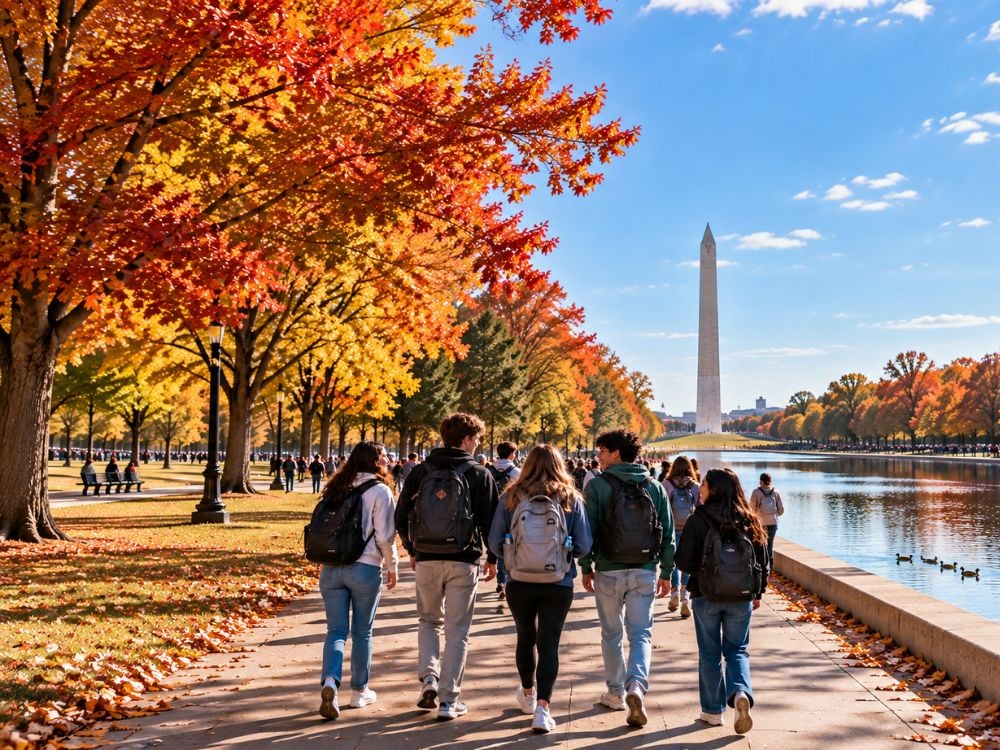
Cities throughout the Northeast and Mid-Atlantic may offer cooler temperatures and colorful foliage. Destinations like Boston, Philadelphia, and Washington, D.C. can offer students a completely different seasonal experience in the fall.
That can be especially helpful on student trips, where itineraries often involve a lot of walking and time outdoors.
Fall also brings seasonal experiences you simply can’t recreate in the spring.
A history trip through New England can coincide with changing leaves. A visit to a historic town can feel completely different surrounded by fall scenery. Consider how much fun and historical a student trip to Salem would be during spooky season.
Of course, weather should be one factor among many when choosing your travel dates. Talk with your travel planner about what conditions are typically like in your destination during the dates you’re considering.
6. Build Student Relationships at the Beginning of the Year
One of the biggest advantages of fall student travel has very little to do with hotels, attractions, or pricing.
It’s about timing.
A spring trip often celebrates the relationships students have built throughout the school year. A fall trip can help create those relationships in the first place.
Travel gives students opportunities to interact outside their normal classroom routines. They eat meals together, explore new places, solve small problems, experience new things, and create stories they’ll continue talking about when they return to school.
Students who may not normally spend time together can get to know one another. Teachers can connect with students in a different environment. A group that felt unfamiliar in August or September may return from a trip feeling much more connected.
For programs that rely heavily on teamwork, such as band, choir, orchestra, theatre, dance, clubs, and other student organizations, that early bonding can be particularly valuable.
Instead of waiting until the end of the year to celebrate your community, you can use travel to help build it.
7. Bring the Experience Back Into the Classroom
Educational travel can be powerful because students experience what they’ve learned outside the classroom, and those experiences can stick with them long after they return.
Research into the long-term impact of school trips found that 96% of participants could recall a school field trip from earlier in their education. Nearly 100% could remember something they learned during the experience, with most of those memories connected to the subject matter itself. – Wiley Online Library
Traditionally, a spring trip may serve as the culmination of a unit, semester, or school year. Students learn about a subject and then see it come to life when they travel.
Fall travel gives teachers an opportunity to reverse that sequence. Students can have the experience first and then bring it back into the classroom.
A student who has stood inside the U.S. Capitol may approach a government lesson differently. A student who has walked the Freedom Trail can connect future history lessons with places they’ve actually seen. A music student who participated in a professional workshop can apply what they learned throughout the rest of the performance season.
ETA Group Leaders who travel in the fall have also told us that students can be more interested in the curriculum when it is taught after the trip. Instead of encountering a topic for the first time in a textbook, students already have places, conversations, and experiences they can connect to what they’re learning.
That firsthand experience can also give students more to draw from during classroom discussions, projects, and papers.
For teachers, “Remember when we saw this?” becomes a powerful teaching tool they can use throughout the school year.
Instead of the trip being the final chapter of the year, it becomes part of the foundation for what students learn next.
8. Avoid the End-of-Year Scheduling Crunch
Spring gets busy fast.
Standardized testing, AP exams, sports, concerts, competitions, prom, graduation, final projects, and other school activities can all compete for limited space on the calendar.
For high schools, May can be particularly challenging. AP exams alone are scheduled across the first two full weeks of May each year, with late testing extending into a third week. State assessment windows can also take up multiple weeks during the spring.
Add a multi-day student trip to the mix, and finding dates that work for students, teachers, administrators, and families can become challenging.
School and district approval timelines can create another challenge. Teachers who wait until the end of the school year to submit a trip for approval may run into summer schedules when school boards meet less frequently or not at all. Once boards reconvene, budgets, staffing, transportation, and other beginning-of-year priorities may take precedence on meeting agendas.
Planning a fall trip well in advance gives teachers an opportunity to begin the approval process earlier rather than relying on a summer approval timeline.
Of course, fall calendars aren’t empty. Sports, performances, holidays, and other school events still need to be considered. But for schools that find their spring calendar increasingly difficult to navigate, fall may provide another travel window worth exploring.
Start by reviewing your school calendar with your administration. Look for testing dates, teacher workdays, holidays, major athletic events, performances, and other commitments. Then compare those dates with potential fall travel windows.
If you’re starting the approval process for a new travel schedule, our guide to getting an educational trip approved by admin can help you prepare before approaching school administrators
9. Start Planning and Recruiting Students Early
A fall trip doesn’t mean planning starts when students return to school. In fact, some of the most successful fall trips begin taking shape well before the previous school year ends.
ETA can begin setting up a student trip two to three years before departure. Starting early gives teachers more time to get approval, promote the trip, recruit students, fundraise, and prepare families for the cost.
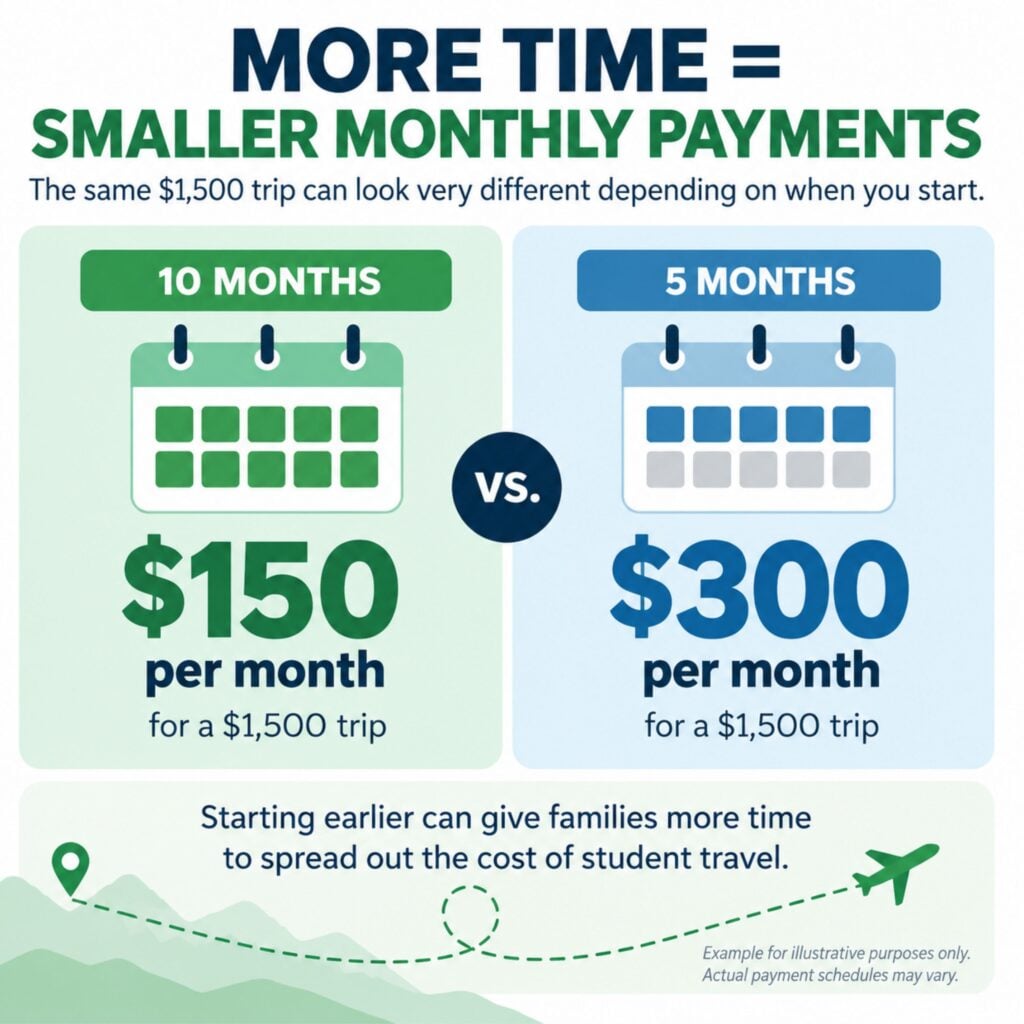
For families, that extra time can make a meaningful difference. A longer enrollment and payment window allows families to spread the cost across more months rather than trying to fit the same expense into a shorter period.
For example, a $1500 trip spread across 10 months works out to about $150 per month. Give families only five months, and that increases to about $300 per month.
Starting early can also give students more time to fundraise and help teachers build excitement around the experience. For programs like band, choir, dance, language clubs, and other student organizations, having a future trip on the calendar can also give students something exciting to work toward together.
The goal isn’t simply to book earlier. It’s to give teachers, students, and families more time and more options to make the trip possible. Read more about why it’s never too early to book student travel.
Our Trip Promotion 101 and Fundraising Guide offer practical ideas for getting students and families involved early.
10. Already Travel in Spring? Here’s How to Move Your Trip to Fall
If your school has traveled in the spring for years, changing the schedule can sound more complicated than simply choosing different dates.
You may already have an established routine. Teachers know when to start planning. Administrators know when to expect approval requests. Families know when the trip happens. Students may even look forward to the tradition.
You don’t have to disrupt all of that at once.
The easiest way to move an established trip from spring to fall is to plan the transition well in advance.
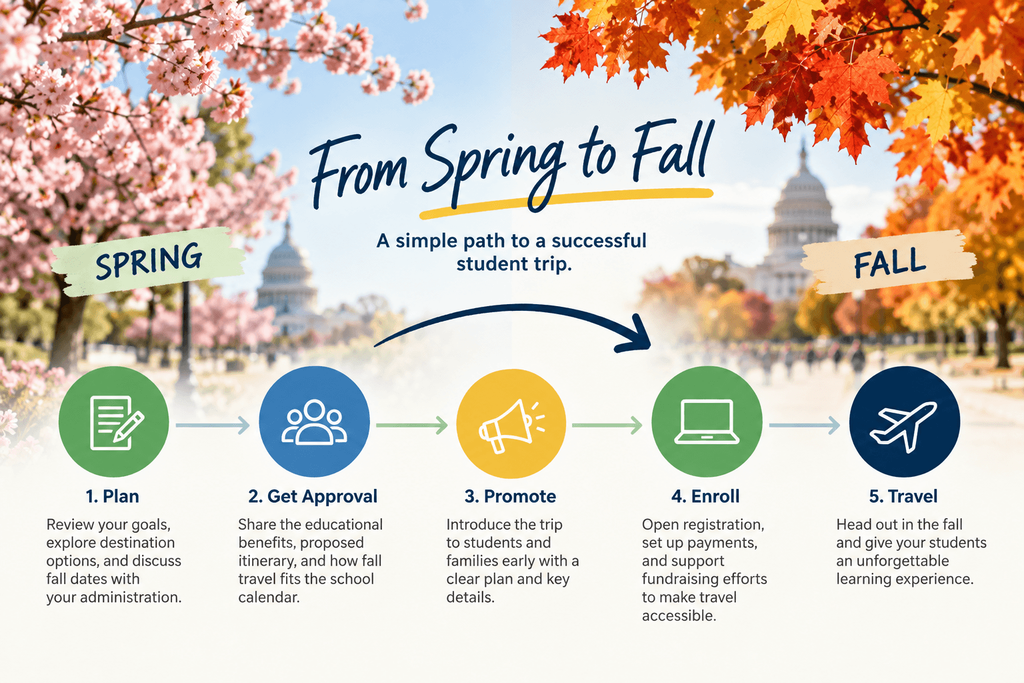
Start with your administration. Before announcing a change, talk with school leadership about why you’re considering fall travel. Bring potential dates and explain how the new schedule could fit into the academic calendar.
Compare the actual trip options. Ask your student travel company to price and build comparable spring and fall options. Look at more than the final price. Compare hotel choices, transportation, attraction availability, itinerary timing, and other priorities for your group.
Communicate the benefits clearly. Families may initially wonder why a familiar trip is changing. Explain the reasoning, whether that includes scheduling, availability, educational benefits, potential pricing opportunities, or the chance to build student relationships earlier in the year.
Promote the trip during the previous school year. If students will travel in September or October, waiting until they return to school may not leave enough time. Begin introducing the trip before summer so families have time to plan. If you need help building your promotion plan, start with Trip Promotion 101.
Open enrollment early. Giving families additional time to register, budget, make payments, and fundraise can make the transition smoother.
Keep the parts students love. Moving the trip to fall doesn’t mean reinventing the entire program. If certain attractions, traditions, workshops, or experiences are important to your school, make them priorities when creating the fall itinerary.
For some schools, the transition could mean taking one final spring trip and then beginning the next travel cycle the following fall. For others, it may make sense to gradually adjust dates.
There isn’t one transition plan that works for every school.
The goal is to preserve what makes your trip successful while finding a schedule that may work even better for your students, families, and school community.
Is a Fall Student Trip Right for Your Group?
Spring remains a great time for student travel, and for many schools, it will continue to be the right choice.
But it doesn’t have to be the default simply because that’s when you’ve always traveled.
Fall can offer some compelling advantages, including greater availability, potential pricing opportunities, smaller crowds, seasonal experiences, and fewer conflicts with end-of-year activities.
More importantly, traveling earlier can change what the experience means for your students.
Rather than ending the school year with a shared adventure, you can begin it with one and spend the months that follow building on the relationships, memories, and lessons created along the way.
If you already have a spring trip, you don’t have to commit to changing it before you know what your options are.
See what your trip could look like in the fall!