
Discover Hungary
Hungary Educational Tours & School Trips
Step into the grand history, haunting memorials, and breathtaking beauty of Budapest and beyond. Hungary offers student traveler groups an unforgettable journey through empires, resilience, and one of Europe’s most magnificent cultures.
Hungary Student Tours Made Easy
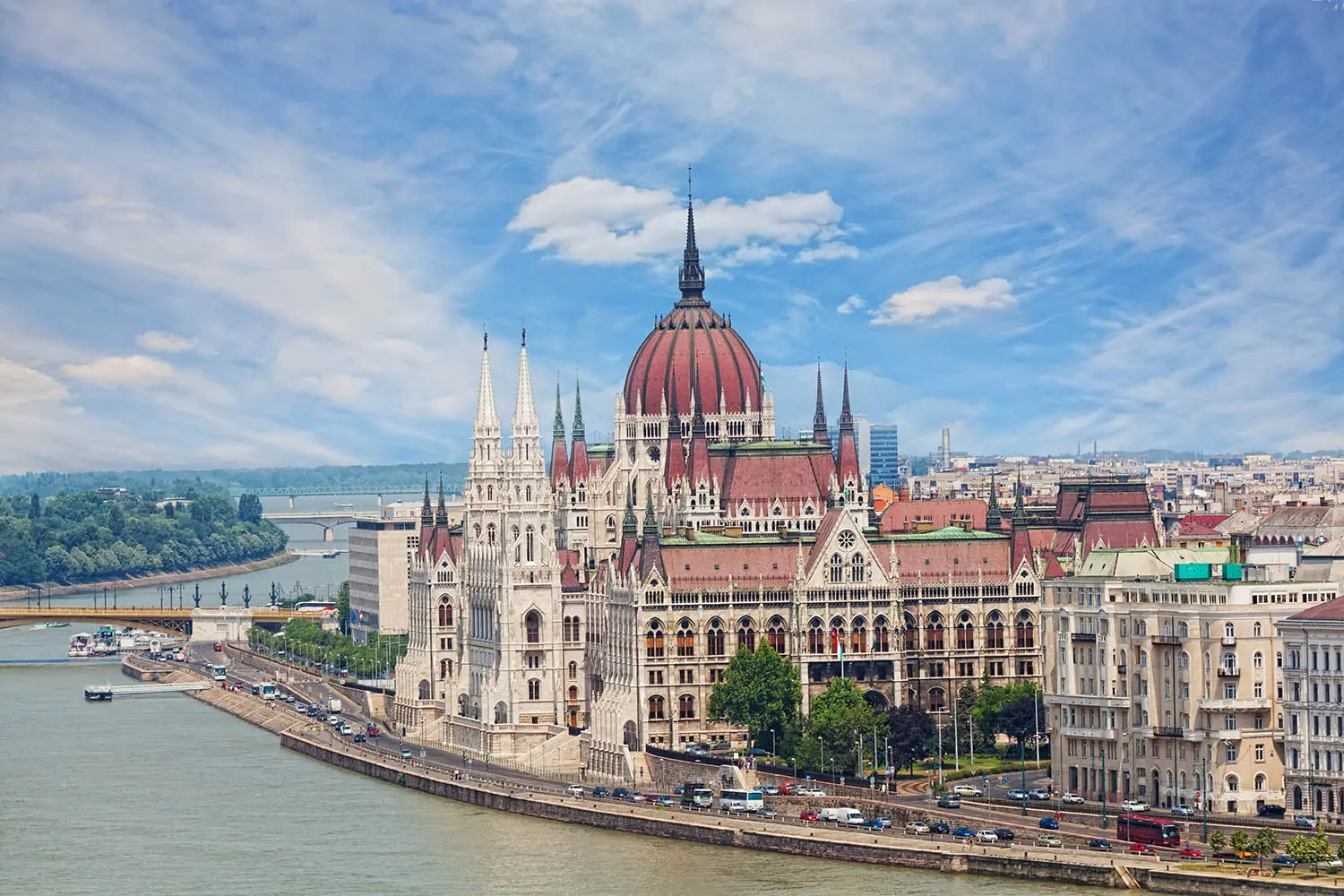
Hungary is one of Europe’s most captivating and most underappreciated educational travel destinations. At its heart is Budapest, a city of extraordinary architectural grandeur, complex and layered history, vibrant Jewish heritage, and remarkable cultural vitality. Straddling the Danube River with the hilly Buda on one side and the flat, sweeping Pest on the other, Budapest offers student groups a visually stunning and intellectually rich setting for deep learning across history, architecture, political science, art, music, and social studies.
From powerful Holocaust memorials and one of the world’s largest synagogues, to opulent opera houses and medieval castles, Hungary provides experiences that are simply not replicable in a textbook. Educational Travel Adventures designs fully customized Hungary school trips that bring curriculum to life in one of the world’s most historic cities.
The Chain Bridge & the Banks of the Danube
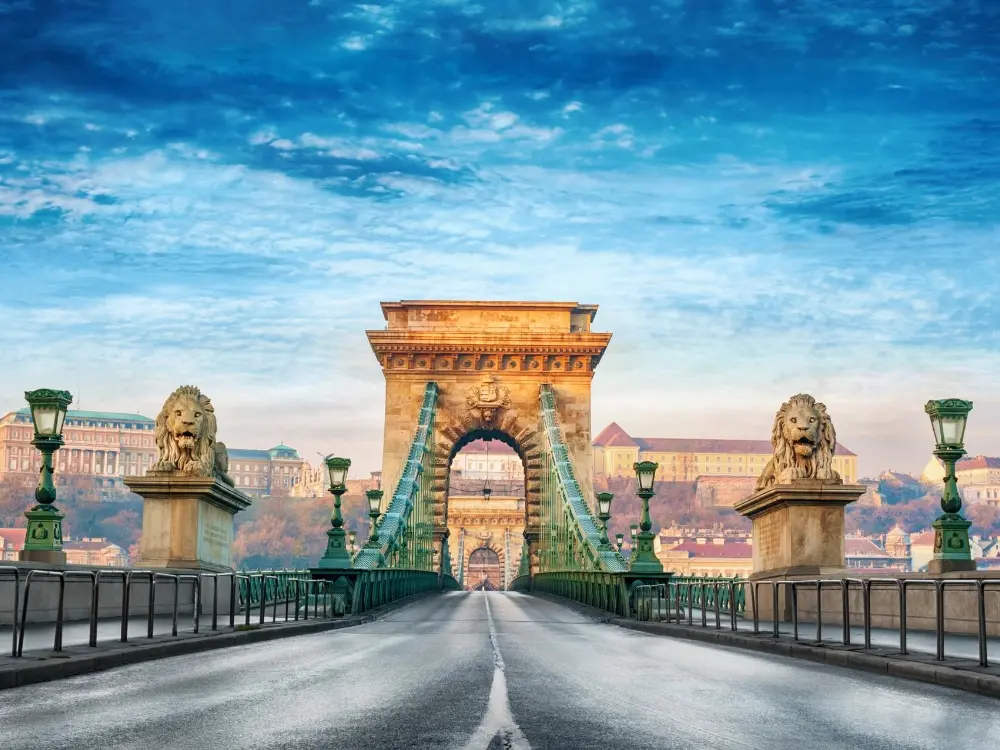
Few sights in Europe are as instantly iconic as Budapest’s Chain Bridge (Széchenyi Lánchíd), arching gracefully across the Danube River to connect Buda and Pest. Built in 1849, the Chain Bridge was one of the great engineering achievements of its era and the first permanent bridge to link the two halves of what would become Budapest. Walking across it gives students an immediate, visceral sense of the city’s geography and history, along with one of the best views in all of Europe.
The UNESCO World Heritage-listed banks of the Danube form the spine of Budapest’s historic identity. From the Chain Bridge, groups can take in sweeping panoramas of both the Buda Castle District and the Pest waterfront, providing a perfect orientation for the days of discovery ahead. The Danube Promenade (Duna-korzó) running along the Pest side is a wonderful place for students to explore on foot and absorb the city’s remarkable riverside beauty.

Jewish History, the Dohány Street Synagogue & Shoes on the Danube
Budapest has one of the most significant Jewish histories in all of Europe, and student groups visiting Hungary have the opportunity to engage with that history in a deeply meaningful and educational way. The Dohány Street Synagogue (also known as the Great Synagogue) is the largest synagogue in Europe and the second largest in the world, a breathtaking Moorish Revival structure that serves as both a place of worship and a powerful monument to Hungarian Jewish life and memory.
The synagogue complex also includes the Hungarian Jewish Museum, a Holocaust Memorial Room, and the moving Raoul Wallenberg Memorial Park, a weeping willow sculpture whose leaves are inscribed with the names of victims of the Hungarian Holocaust. This is a deeply important site for students studying World War II, the Holocaust, religious history, and human rights.
Nearby, the Shoes on the Danube Bank memorial is one of the most quietly devastating Holocaust memorials in the world. Sixty pairs of iron shoes line the riverbank, a tribute to the Jewish men, women, and children who were shot by the Arrow Cross militia and fell into the Danube during World War II. For students, this memorial provides a profoundly human-scale encounter with history that no classroom lesson can replicate.

Budapest Castle Hill & Buda Castle
Rising dramatically above the Danube on the Buda side, Castle Hill is arguably the most historically dense single location in all of Hungary. This UNESCO World Heritage site encompasses a labyrinth of medieval streets, Baroque palaces, Gothic churches, and underground tunnels, all telling the story of a city that has survived Roman settlement, Ottoman occupation, Habsburg rule, Nazi invasion, and Soviet domination.
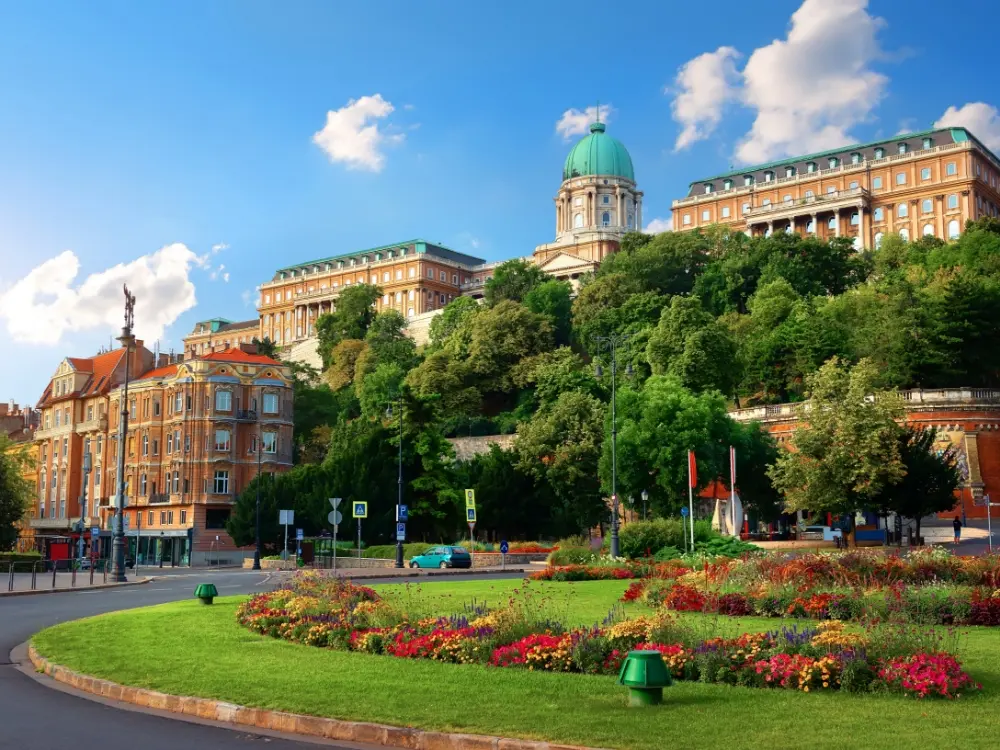
Buda Castle (the Royal Palace) anchors the hilltop with its sweeping golden wings and commanding views over the entire city. Today it houses the Hungarian National Gallery and the Budapest History Museum, both of which offer exceptional educational programming for student groups. Students can explore Hungarian art spanning centuries alongside the city’s archaeological layers, literally walking through history on Castle Hill’s cobblestone streets.
The funicular ride up to Castle Hill is itself a memorable experience, and the panoramic view from the Fisherman’s Bastion, a fairy-tale turretted terrace just steps from the Matthias Church, is one of the great vistas of European travel.

Budapest Opera House, Andrássy Avenue & Heroes’ Square
Budapest’s Andrássy Avenue is often described as Hungary’s equivalent of the Champs-Élysées, a grand, tree-lined UNESCO-listed boulevard stretching from the city center all the way to the magnificent Heroes’ Square and City Park. For student groups, a walk along Andrássy Avenue is a lesson in architecture, culture, and history all at once.
At one end of Andrássy Avenue stands the Hungarian State Opera House, one of the most beautiful neo-Renaissance opera houses in the world. For performing arts student groups, attending a performance or taking a guided tour of this legendary venue is a truly once-in-a-lifetime experience. The interior is lavishly decorated with gold, marble, and remarkable frescoes, and the Opera House has hosted some of the world’s greatest conductors and performers throughout its history.
At the opposite end of Andrássy Avenue, Heroes’ Square (Hősök tere) is one of Budapest’s most iconic landmarks, a vast ceremonial plaza anchored by the towering Millennium Monument, erected in 1896 to celebrate 1,000 years of Hungarian statehood. The colonnades are lined with statues of Hungary’s most celebrated historical figures, making it an extraordinary outdoor classroom for students studying European history, political science, and national identity. The adjacent Museum of Fine Arts and the Palace of Art (Műcsarnok) further enrich the educational value of this corner of the city.
Hungary Educational Trip Itineraries
Hungary Educational Tour FAQs
How far in advance should we start planning a Hungary educational tour?


We recommend starting the planning process at least 9 to 12 months in advance for international trips like Hungary. Early planning ensures the best availability for flights, hotels, guided tours, and high-demand experiences such as the Budapest Opera House. It also allows ample time for passports, fundraising, and parent preparation. Educational Travel Adventures can sometimes accommodate shorter timelines, but earlier planning provides the greatest flexibility and value.
Why is Hungary a good destination for an educational school trip?
Hungary, and Budapest in particular, offers student groups an extraordinary depth of educational content across history, architecture, performing arts, Holocaust studies, European politics, and cultural immersion. Budapest is a stunning, walkable city with world-class museums, iconic landmarks, and a layered history spanning Roman, medieval, Ottoman, Habsburg, and 20th-century chapters. It is one of Europe’s most rewarding and memorable destinations for student travelers.
What Holocaust and Jewish history sites are available for student groups in Budapest?
Budapest is home to several significant sites for students studying Jewish history and the Holocaust. The Dohány Street Synagogue, the largest in Europe, is a must-visit, along with its adjacent Hungarian Jewish Museum and Holocaust Memorial. The Shoes on the Danube memorial is one of the most moving Holocaust remembrance sites in the world. Together, these sites provide a deeply humanizing and educational encounter with this history that no classroom experience can replicate.
Is Hungary appropriate for middle school student trips, or is it better for high school groups?
Hungary is an excellent destination for both middle and high school groups, though the experience can be calibrated based on grade level and maturity. High school groups studying World War II, the Holocaust, European history, or international relations will find Budapest particularly rich. Middle school groups can still engage meaningfully with the city’s architecture, culture, performing arts, and science. Educational Travel Adventures tailors every itinerary to the appropriate age group and educational context.
Can student performing arts groups attend a show at the Budapest Opera House?
Yes! The Hungarian State Opera House is one of the most magnificent performance venues in the world, and attending a performance there is a truly unforgettable experience for student musicians, singers, and theatre lovers. Educational Travel Adventures can help coordinate group tickets and, in some cases, guided tours of the Opera House for groups who want to explore this legendary venue in depth.
What STEM or science learning activities exist in Hungary for student groups?
Hungary offers several excellent STEM touchpoints for student travelers. The Danube River’s role in shaping the city’s geography and history supports environmental and earth science discussions. The Budapest Museum of Natural History and the Palace of Wonders (Csodák Palotája) interactive science museum are also excellent options for science-focused student groups.
How many days should we plan for a Hungary educational tour?
We generally recommend a minimum of 4 r to 5 days in Hungary to do Budapest justice and experience the key highlights. Longer trips of 6 to 8 days allow for day trips to other Hungarian destinations such as the Danube Bend, Eger, or the Puszta region, as well as more in-depth exploration of Budapest’s neighborhoods and museums. Educational Travel Adventures will work with you to find the right length and pace for your group.
What is the best time of year to visit Hungary with a student group?
Spring (April–June) and fall (September–October) are the ideal times to visit Budapest with student groups. Temperatures are comfortable for walking tours, crowds are more manageable than in peak summer, and the city is strikingly beautiful in both seasons. Summer is warm and lively but can be busy. Winter visits can be a magical time to visit, thanks to Budapest’s famous Christmas markets.
Is Hungary safe for student group travel?
Yes. Budapest is consistently ranked among the safest capital cities in Europe for travelers. Hungary has a well-developed tourism infrastructure with English widely spoken in hotels, restaurants, and major attractions. Educational Travel Adventures provides comprehensive logistical support, vetted local guides, carefully selected accommodations, and full safety protocols to ensure your group has a safe, smooth, and enriching experience from start to finish.
Can our Hungary tour be customized to focus on a specific subject area?
Absolutely. Educational Travel Adventures designs every itinerary from scratch to match your group’s curriculum, interests, and goals. Whether you’re building a trip around Holocaust and human rights education, European history, performing arts, architecture, or cultural immersion, we will craft a Hungary experience that is directly relevant to what your students are studying and designed to maximize their learning and engagement.
What currency is used in Hungary, and how do students manage money?
Hungary uses the Hungarian Forint (HUF) rather than the Euro, though many tourist-facing businesses in Budapest accept Euros and major credit cards. We provide all groups with thorough pre-trip preparation materials, including guidance on currency exchange, budgeting, and tipping customs, so that students and chaperones feel confident navigating day-to-day finances during the trip.
What travel documents are required for students visiting Hungary?
Students traveling to Hungary will need a valid passport, typically with at least six months of validity beyond the travel dates. Hungary is part of the Schengen Area, so U.S. travelers do not need a visa for short-term educational travel. Educational Travel Adventures provides detailed pre-departure guidance to ensure all students and chaperones are fully prepared with the necessary documentation.
Do you offer educational tours beyond Hungary?
Yes. In addition to Hungary, Educational Travel Adventures offers a wide range of educational trips to Europe and international student trips around the world. Many groups choose to combine Hungary with nearby destinations such as Austria, the Czech Republic, or Germany for a broader Central European experience. We also plan teacher led travel programs throughout the United States and we are happy to help you compare destinations to find the best fit for your group.
Plan Your Educational Tour to Hungary
Hungary has some of Central Europe’s top attractions and offers many educational experiences. Student groups can immerse themselves in the local culture, visit historic sights, and learn about Hungary’s rich history, including its role in the Austro-Hungarian Empire.