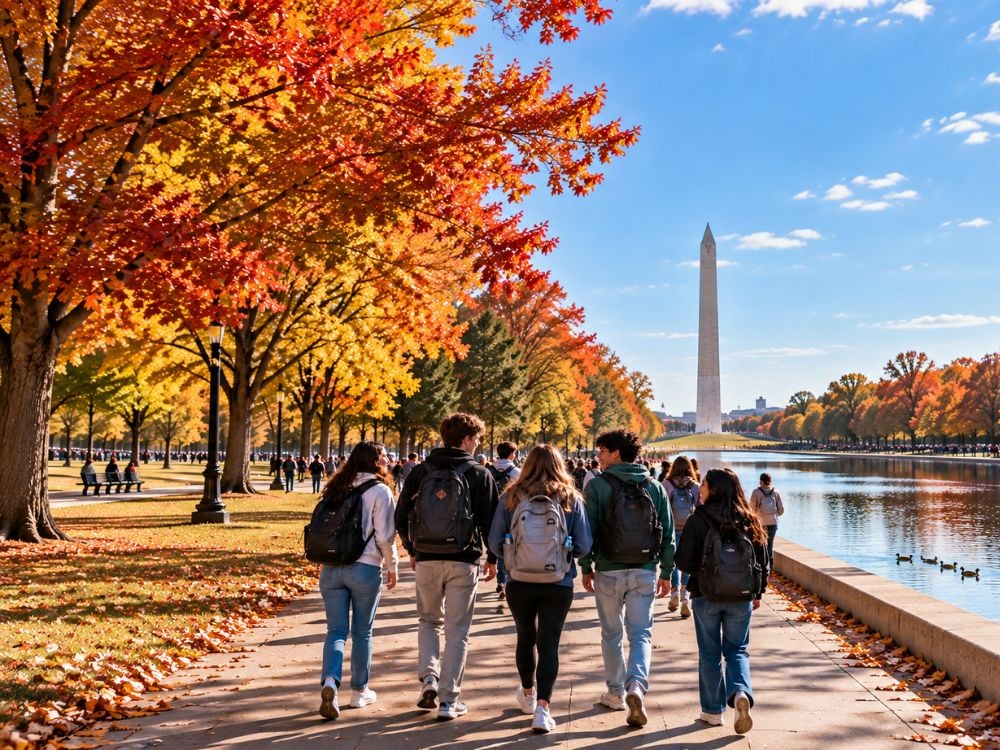
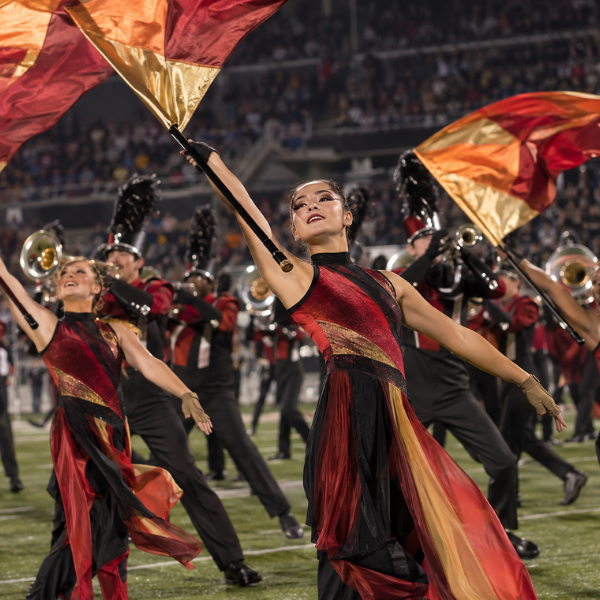
Friday night football may get the lights, but for thousands of marching band students, halftime is only part of the story. Fall is competition season, and some of the biggest performances are still ahead.
You know marching band season is here when the stadium lights are on, the metronome is going, and somebody is asking if there’s time to eat before the equipment truck gets loaded.
Fall moves fast for band students, directors, and families.
Football games, after-school rehearsals, early Saturday mornings, uniforms, props, buses, and competitions. Lots of competitions.
For bands on the Bands of America (BOA) circuit, it can all lead to one very big weekend: the Bands of America Grand National Championships in Indianapolis.
What Is Bands of America?
Bands of America is part of Music for All, a nonprofit music education organization founded in 1975.
BOA hosts marching band competitions across the country, giving high school ensembles the chance to perform, get feedback from nationally recognized judges, and see what other programs are creating.
Yes, it’s competitive. But BOA also treats these events as educational performance opportunities.
That matters.
Students are putting months of music, movement, teamwork, and problem-solving onto the field in one very public, very high-pressure performance.
The 2026 BOA season begins September 19 and runs through regional and Super Regional competitions across the country before ending in Indianapolis.
Then Comes Grand Nationals
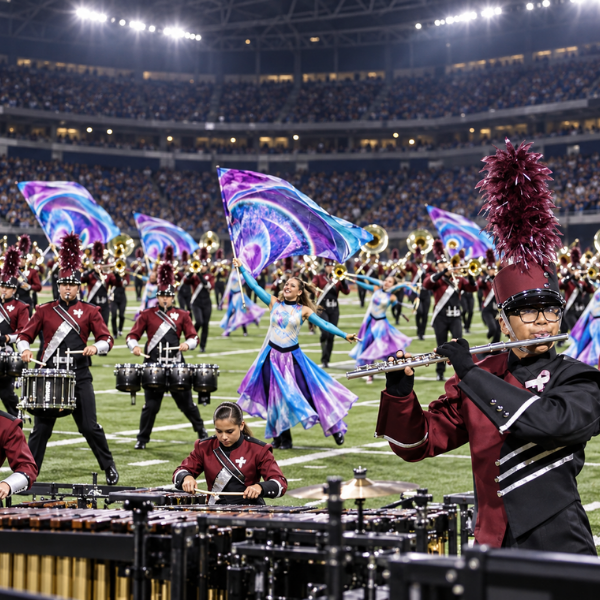
The 2026 Bands of America Grand National Championships take place November 12–14 at Lucas Oil Stadium.
For marching band people, Grand Nationals is a big one.
The three-day championship includes Preliminary, Semi-Finals, and Finals competitions, with bands traveling from across the country to perform on the same field.
Grand Nationals has been part of the BOA world for decades. The first national marching championship was held in 1976, with the first fall Grand Nationals following in 1980. The event moved to Indianapolis in 1984.
Today, bands compete inside Lucas Oil Stadium, home of the Indianapolis Colts.
For a teenager used to performing under Friday night lights, stepping onto that field hits a little differently.
What Are the Judges Looking For?
Competitive marching band has come a long way from straight lines and traditional marches.
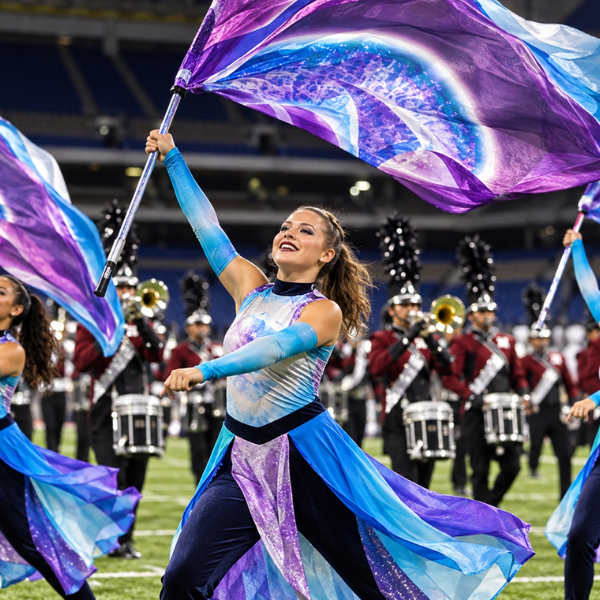
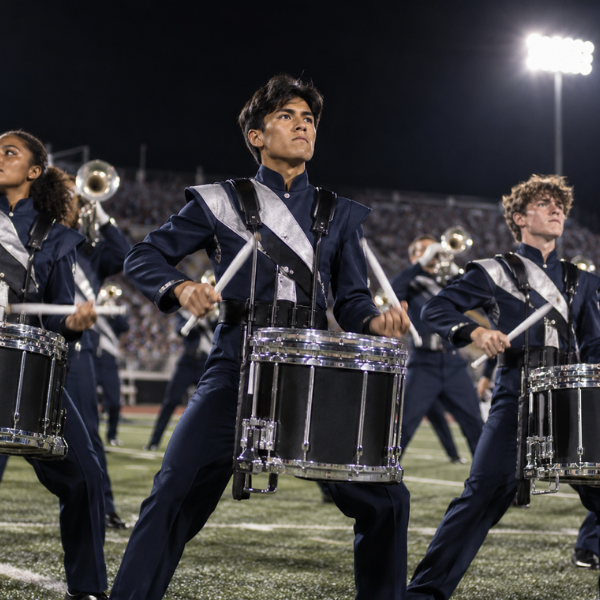
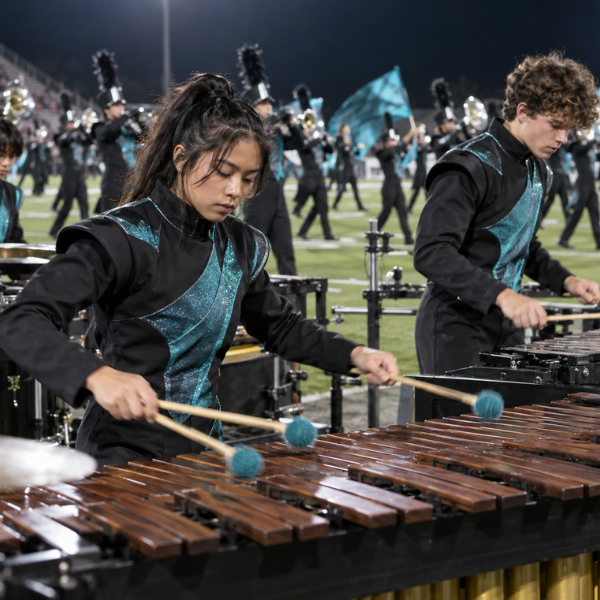
Today’s shows can include choreography, color guard, electronics, large props, visual storytelling, and theatrical staging.
But the basics still matter.
Under BOA’s current scoring system, 60% of the score is based on music and 40% on visual performance, with a strong emphasis on overall effect.
Making Finals Is Hard
Every band at Grand Nationals starts in Preliminary competition.
From there, at least 30 bands advance to Semi-Finals.
Then the field drops to just 12 finalists.
Twelve.
After months of band camp, football games, rehearsals, and probably one specific eight-count that has been cleaned approximately 700 times, those twelve groups get one more performance.
But the weekend is bigger than placement.
Students get to watch bands from other states, hear different musical styles, see completely different show concepts and experience the marching arts at an incredibly high level.
That alone can be pretty inspiring.
We Know This Weekend Pretty Well
Our team includes BOA-veteran band directors who have taken students across the country to perform at Super Regionals and Grand Nationals.
That firsthand perspective shapes how ETA supports marching bands on the road, including Wando High School from South Carolina at the 2025 Bands of America Grand National Championships.
They made Finals and finished 11th in the nation.
Getting a marching band to Grand Nationals, though, is a little more complicated than getting a group of students to Indianapolis.
There are instruments. Props. Uniforms. Equipment trucks. Rehearsal schedules. Meals. Hotels. Warm-up times. Performance times. Students, staff, and chaperones who all need to be in the right place at the right time.
Preferably with the right instrument.
Our job is to handle the travel pieces so directors can stay focused on their students and the performance.
Read more about Wando’s Grand Nationals trip and how ETA handles high-stakes performance travel.
The Part That Doesn’t Show Up in the Score
Anyone who has spent a season around marching band knows the final score only tells part of the story.
There’s the first full run of the show.
The rehearsal when something finally clicks.
The freshman who couldn’t march and play at the same time in August but somehow makes it look easy by November.
The senior realizing this is their last season.
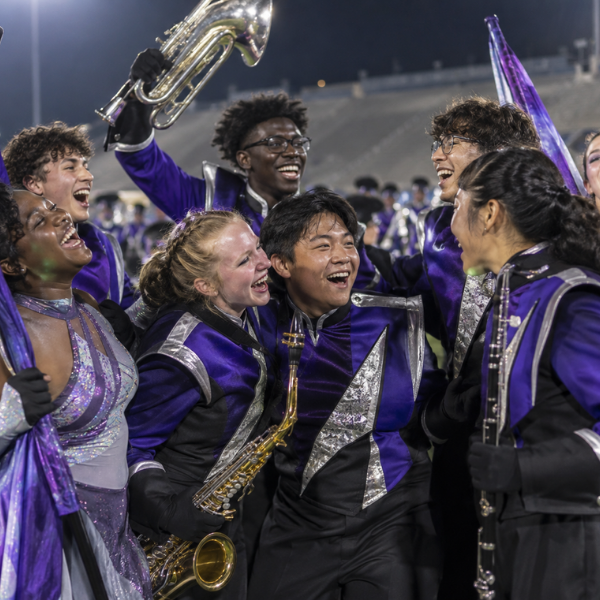
The bus rides. Section jokes. Pre-show nerves. Post-show hugs.
And, of course, the painfully long silence before Finals are announced.
Competition matters.
So does everything students learn getting there.
That’s the part of marching band that sticks.
You start with dots on a field and notes on a page.
By the end of the season, you’ve built something together.
See You Under the Lights
The 2026 marching season is just getting started.
Between football games, BOA Regionals, Super Regionals, and Grand Nationals, there is a lot of music still ahead.
So here’s to the students stepping onto the field, the directors holding clipboards, the parents moving props at unreasonable hours, and every staff member who says “one more time” when everyone knows it will not, in fact, be one more time.
Have a great season.
Planning a Marching Band Performance Tour?
ETA builds performance tours around the needs of your ensemble, whether you’re headed to a major competition, festival, parade, or performance opportunity.
Because when performance day arrives, your director should be thinking about the music, not the motorcoach.